
Grady County Busted Mugshots
A mugshot is the photo a jail takes at booking. The booking record sits beside it. That record holds the name, charges as booked, bond, and release details. The sheriff runs the local detention facility here, which government directories also call the Grady County Jail. Several agencies can make arrests in the county. The sheriff, Cairo Police, Whigham Police, or another department may act, and that agency writes the incident report. Once the person is in custody, the jail creates its own intake entry.
The process moves fast. Arrest, transport, intake, identification, booking, then a custody decision. A photo may be taken at intake. No official Grady source publishes a policy about putting faces online, and there is no public inmate search among the sheriff's current or older interfaces. So a booking image can exist inside the system while nothing appears on the web. Charges listed at booking can also change later, as cases move through court.
Booking details reflect one moment in the process. The filed court record is where the full story of any Grady County case comes together.
Two official links are worth keeping handy. The Grady County sheriff page names Sheriff Martin “Earl” Prince's office and gives its current public contact route. A legacy jail information page describes the detention facility's role. It is not a live roster.
Grady County Busted Record Fields
Ask for fields that exist. Don't expect a standard public result card. Grady publishes no field dictionary. A practical approach: gather the full name, an approximate booking date, and the arresting agency. Then ask the record custodian which jail entries hold the specific details you want. Need the incident narrative itself? Request the arrest or incident report from the agency that created it.
| Field | What it can show |
|---|---|
| Booked name and aliases | The name used at intake and any known alternate name recorded by the custodian. |
| Booking or jail ID | An identifier that helps separate one intake from another and match later requests. |
| Arresting agency and dates | The agency involved, arrest date or time, and booking date or time when recorded. |
| Custody status | Intake, facility placement, release status, and related dates held in the jail record. |
| Booked charge text | The charge and statute label entered at intake, which may not match the final case. |
| Bond and court | Bond type or amount and a scheduled court reference, if those fields exist. |
| Booking photograph | An intake image if one was made and the custodian determines it is releasable. |
A few definitions help when reading a booking entry. The charge is what was recorded at intake. Bond is a release condition, nothing more. A release date shows custody ended, not that a case was dismissed or the person cleared. Some material stays protected by law. That includes juvenile records, sealed files, victim information, medical details, investigative material, security items, and shielded identifying data, all of which may be withheld or redacted.
Note: A booking number and a court case number can belong to different custodians, so match both before treating records as one timeline.
Request Grady County Booking Records
No public Grady roster or booking-photo feed exists. A formal request is the way in. Send a focused Georgia Open Records request to the Grady County Sheriff's Office. The sheriff's contact block lists 115 16th Avenue NE, Cairo, GA 39828. The phone is 229-377-5200, and the email is sheriff@gradycountyga.gov. Administrative office hours run Monday through Thursday, 8:00 a.m. to 5:00 p.m. Jail hours may differ, so call before making the trip.
Timing and cost rules matter too. The Georgia Attorney General Open Government FAQ says an agency should respond within three business days or give a written explanation of timing, estimated cost, and any exemption claimed. The agency never has to create a new report. No sheriff-specific fee schedule is published. Ask for electronic copies and a cost estimate before authorizing any set amount.
- Name the person, approximate booking date, and any known booking or case number.
- Request the existing jail intake or booking record and booking photograph as separate items.
- Ask the sheriff to identify the custodian if the incident report belongs to Cairo, Whigham, or another agency.
- Request a written estimate before costs exceed the amount you set, and ask for electronic delivery.
- If material is withheld, ask for the specific statutory exemption and keep the response with the request.
Sheriff records contact
Grady County Sheriff’s Office
115 16th Avenue NE
Cairo, GA 39828
229-377-5200
Cairo Police offers a useful point of comparison through its own police Open Records route. The first 15 minutes of labor are free. Black-and-white copies run ten cents per page. Certified copies cost $5 for the first page plus $1 for each added certified page, and reports are usually ready in about two days. Those rates apply to Cairo Police only. They do not bind the sheriff or Whigham.
Note: The three-business-day rule governs an agency response, not a promise that a large or redacted record set will be delivered in three days.
Georgia Busted Mugshot Law
Georgia treats public records through the Open Records Act, O.C.G.A. §§ 50-18-70 through 50-18-77. The law opens existing agency files to the public, with some exemptions carved out. The Attorney General’s FAQ covers response deadlines, copying costs, redaction, and one point people often miss: an office does not have to create a new summary just to suit a request. And if a county posts no online portal, that alone says nothing about whether a booking record exists or stays sealed away internally.
Two statutes target booking photos directly. O.C.G.A. § 35-1-19 deals with requests for a photo destined for a website that charges takedown fees. O.C.G.A. § 10-1-393.5 governs commercial mugshot publishing and removal. According to the Georgia Attorney General consumer explanation, a covered publisher must remove a photo for free once it receives a written request with proof of a qualifying outcome. Use the official route. Skip paid middlemen, and remember that removal from one publisher does not scrub the agency record or a lingering search result.
For court-side relief, Georgia uses a process called record restriction. The official restriction page lays out eligibility, which turns on the arrest date, the charge, the case outcome, and prior history. It splits arrests before and after July 1, 2013, and walks through prosecutor review, a 90-day decision window, a 30-day appeal window, and other time-based categories. Restriction limits who can spread the record. It does not burn every copy held by every custodian. The 2026 signed HB 162 tweaks First Offender treatment, but nobody should read it as a guarantee that every booking photo disappears.
Wrong name on a record? Contact the agency that keeps it and describe the error precisely. When a publisher deletes a page, stale search links can linger. Google’s outdated-content process and Bing’s content-removal tool help clear those. Neither tool touches the source record itself.
Keep each remedy separate. A correction, a record restriction, a publisher's free removal, and a search-result refresh are four distinct actions. Promise none of them until the underlying record and the current official rule have been checked.
Georgia's local retention schedules control how long booking material survives. Series LG-19-054, LG-19-060, and LG-19-061 are the ones that matter. They cover law-enforcement case files, booking records, and jail registers. Each runs ten years from release or closure. The Georgia Archives schedule spells out the exact trigger for each series. For truly old files, Georgia Archives research services can help locate the right series. Keep one thing straight: ten years of retention is not ten years of posting online.
Grady Jail Processing Volume
Georgia's own name for cleaning up a court record is record restriction. Per the official restriction page, eligibility turns on the arrest date, the disposition, the charge, and the person's record history. Arrests before and after July 1, 2013 follow different tracks, with prosecutor review, a 90-day decision window, a 30-day appeal period, and several time-based categories. A restriction limits how widely a record spreads; it does not burn every copy held by every custodian. The 2026 signed HB 162 reshapes parts of First Offender treatment, but it does not mean every booking photo simply vanishes.
When the record itself is wrong, contact the agency that maintains it and spell out the exact entry. If a publisher deletes its page, stale search results can be cleared through Google's outdated-content process and Bing's content-removal tool. Neither tool touches the source record itself. Fix the record first, then clean up what points to it.
Find Grady County Busted Mugshots
Every search starts with two questions. Where is the person now, and which agency created the record? Someone just arrested or held locally falls under the sheriff and the detention facility. A released person may drop off the current-custody view. The booking record still exists under retention rules, though. A person serving a state sentence lives in the GDC system instead. Federal or immigration detainees show up in federal locators, not on a county roster.
- Call the sheriff at 229-377-5200 for a narrow present-tense custody question that the office can release.
- Check the sheriff’s official news and alerts for a selected incident post, while treating it as incomplete.
- Request the existing jail record and photo when no public roster or feed answers the question.
- Check Cairo or Whigham Police when the city agency created the incident report or citation.
- Move to court records for the filed case and disposition, or to GDC, BOP, or ICE when custody has changed.
The county's real search path is a chain of offices, not one universal mugshot page. Keep your facts in one place. That means the arrest date, arresting agency, booking number, and court case number. A failed name search or a missing news post does not mean the arrest never happened.
Want active alerts instead? The Sheriff's Most Wanted page collects warrant-related notices. For local reporting, Mugshots in the News names the outlets that cover Grady bookings and notes where their coverage stops.
Where Grady County Busted Mugshots Appear
Volume does not add up to a public list. One facility books them all. County deputies bring people in, and so do Cairo officers, Whigham officers, and state officers. Other agencies use it too. A city name tells you where something happened, not who made the bust or which report holds the narrative.
| Channel | Photo? | Official? | How to use it |
|---|---|---|---|
| Grady sheriff roster | Unknown | Official, no public portal verified | Call the sheriff or request an existing record. |
| Sheriff news and alerts | Varies | Official | Read selected incident posts at the sheriff’s news page. |
| MySheriff app | No inmate module verified | Official gateway | Use for news, alerts, services, and agency connection. |
| Records request | Ask whether releasable | Official | Request the jail intake record and photo from the sheriff. |
| Court file | Not a booking-photo source | Official | Use PeachCourt routing and the clerk for charges and disposition. |
| GDC offender search | Displays when available | Official | Use for state-corrections records, not a new county arrest. |
| WALB and WCTV | Varies by story | News outlets | Read selective coverage, then verify with agency and court records. |
| Historical Mugshots.com page | May show older images | Unofficial | Use only as a stale-prone lead and cross-check every detail. |
Begin with custody status and the likely record creator. Someone arrested moments ago or held locally belongs with the sheriff and the detention facility. A released person may drop out of a current-custody view even though the booking record still exists under retention rules. A person sentenced to state corrections lands in the GDC system instead. Federal or immigration detainees show up in a federal locator, never a county roster.
Grady County Busted Roster Check
So the county's search path is a chain, not one universal mugshot page. Keep the arrest date, arresting agency, booking number, and court case number in one place. A missing news post or a failed name search is not proof that no arrest ever happened. For active alerts and warrant notices, see Sheriff's Most Wanted. For story-driven coverage, the Mugshots in the News page names the local outlets and their limits.
| Roster question | Verified Grady answer |
|---|---|
| Public portal | None verified. |
| Search fields | None observable because no public search control was found. |
| Booking-photo policy | No official online publication policy located. |
| Refresh and lag | Unknown. No fixed update schedule is published. |
| Released-entry persistence | Unknown. No online archive was verified. |
The practical check is short even when the public interface is absent.
- Call the sheriff for a narrow current-custody question.
- Ask for the existing intake record and photograph in writing.
- Keep the response, then use the court record for the later disposition.
Keep it simple. A phone call to the sheriff works best for one narrow question about who is in custody right now. For a booking record or photo that needs to last, put the request in writing instead. When the jail file and the police report sit with two different offices, ask either one to name the records custodian so the paperwork lands in the right hands. Requesting a record that already exists also carries more weight than asking an agency to build a fresh list by stitching together several systems.
Q: Can a person be absent from the roster after an arrest? Yes. Grady has no verified public roster, and a current-custody system would not help with someone already released. A missing result means one thing: go ask the sheriff or file a written request. Treat it as a dead end in your search, not as a conclusion about the case itself.
Note: No public roster means no support for claims about photo timing, same-day refresh, or when a released name disappears.
Grady County Busted Feed Windows
There is no verified 24-hour or 48-hour new-bookings feed here. Nor could any 72-hour, weekly, or archived booking blotter be confirmed for the sheriff, Cairo Police, or Whigham Police. The sheriff's news page does discuss recent arrests, crime reports, seizures, and recovered property. What it does not promise is a complete log, a fixed posting window, standard fields, or a photo attached to every item.
That gap matters to anyone asking who got busted last night. A news item can show what the sheriff said on the day it was posted, nothing more. It cannot prove a person still sits in the Grady jail, and the lack of a post proves no booking happened. For a date range, ask the sheriff whether an existing booking register can be pulled as an extract rather than forcing the agency to create a brand-new database report.
The closest verified web channel is the official news and alerts page. It works well for agency updates and BOLO notices. It is simply not the county arrest log, and readers should treat it accordingly.
MySheriff Alerts for Grady County
The sheriff's website promotes MySheriff as a free app with no registration required, built for connection, news, and alerts. For urgent notices and longer agency news, it is a genuine official channel. What the accessible official copy never claims is a Grady inmate roster or booking-photo feed inside the app. So do not market it to yourself as a jail search, because that is not what it does.
Start from the sheriff's official homepage, since no stable app-store link is published. Alerts and BOLOs can change or resolve fast. When an alert carries a photograph, treat it as an agency notice tied to that single post, not as a standing record and never as permission to approach the person shown.
Busted to State Custody: Georgia DOC
The Georgia Department of Corrections offender search covers state-corrections records only. It will not list everyone arrested or held in Grady County. GDC allows a search by name, description, ID, or case number, and its FAQ offers a handy trick: if the first attempt fails, try only the first four letters of a last name and select all offenders. A photo displays automatically where one exists, though some images are never uploaded.
Remember the timing. State custody comes later, so a fresh Grady booking may never show up in GDC at all. When you do find a match, tie it to the GDC record plus a matching name or case identifier instead of using it to paper over an unresolved county arrest. Records held by GDC go through the GDC Open Records route. County booking photos stay with the sheriff.
GDC lists Inmate Records and Information at P.O. Box 1529, Forsyth, GA 31029. Its state request page describes a three-business-day response framework, with costs that can include ten cents per page plus qualifying labor. The official GDC offender search is the source shown below. Those state terms have no bearing on the sheriff's local fee schedule.
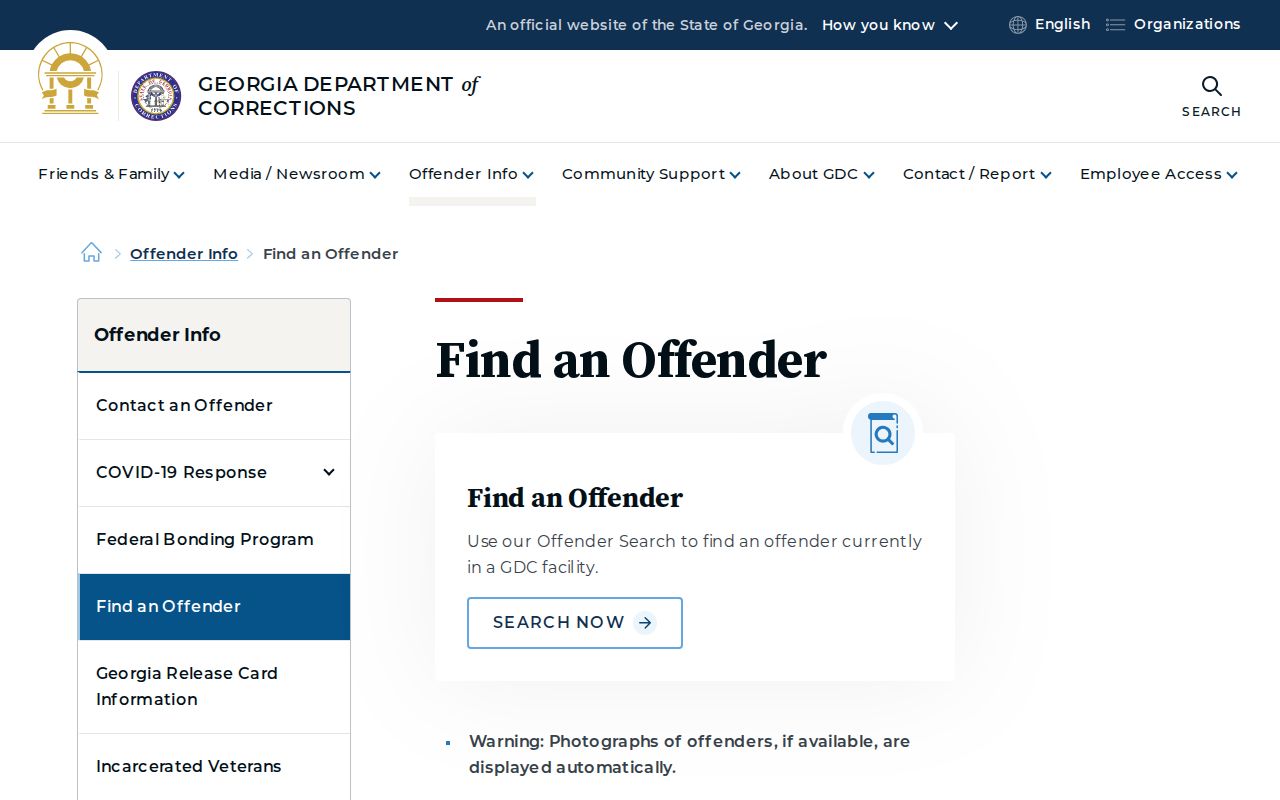
The official GDC search capture shows a path entirely separate from county detention. Use it only after custody has moved from the Grady jail into the state system.
Booked or Released? Grady Record States
Custody status decides where a person can be found. It does not settle what the booking first meant. Along the way, the record chain may pass through several custodians. A current search result is only one point in time.
| Stage | Likely source | What it can answer |
|---|---|---|
| Just arrested | Arresting agency and sheriff intake | Whether an incident or intake record may exist, subject to release rules. |
| In county custody | Grady County Detention Facility | A present-tense custody question or existing jail record, if releasable. |
| Released | Sheriff record plus court clerk | The booking may remain retained while the person drops out of current custody. |
| State corrections | Georgia Department of Corrections | A state-custody profile and photo when available. |
| Federal custody | Bureau of Prisons locator | A federal BOP location, not a public booking-photo record. |
| Immigration detention | ICE detainee locator | An ICE detention location, not a Grady arrest history or photo. |
The Bureau of Prisons locator publishes no booking photos, and a federal pretrial detainee may be held outside a BOP institution altogether. The ICE locator is a detention-location tool with no public mugshot function. No Grady ICE detention contract could be verified.
After a Grady County Booking
Once booking ends, the case belongs to the courts. Arraignment comes early; the judge reads the charge and the person responds. Bond sets the terms of release. The disposition is the court’s final word, whether dismissal, plea, acquittal, or conviction. Walking out of jail tells you none of that.
To track a Grady case online, Georgia’s e-access directory sends State and Superior Court searches to PeachCourt, which requires an account. The clerk of court is Kaylee Page, 250 North Broad Street, Cairo, GA 39828, 229-377-2912. Her office and the Judicial Council e-access page are the two best starting points. Magistrate Court handles early matters like warrants, bond, and probable cause.
A careful check works in steps. Confirm the booked name and date. Find the case number. Read the filed charges. Then scan the latest docket entry, because the picture keeps shifting. Prosecutors may file fewer counts, judges may drop some, and pleas may resolve a case partway. Trust the court’s own words over any booking label.
Booking is not disposition. A mugshot, a charge listed at intake, or a bond entry can help you locate the right file. Only the court record shows how the case actually ended.
Why Grady Juvenile Records Are Withheld
Juvenile files sit apart from adult booking records. The Grady Clerk oversees court material, but juvenile criminal history and juvenile case files carry separate protection under Georgia law. A missing name or photo means only that the record is shielded, not that nothing occurred, and details about a protected minor should never be copied into a public lookup.
Other withholdings are common too. Victim information, protected identifiers, medical material, active investigations, and security-sensitive jail records can all fall outside what is released. When the sheriff or clerk declines to hand over an item, the written response should cite the legal reason. Keep requests narrow and ask only for the specific record needed to confirm the event or court step.
Grady Court Records After Booking
Grady’s State and Superior Court entries are routed through PeachCourt from the official statewide e-access directory. Choose the correct court, keep the case number, and review the latest filing. The Magistrate Court page is useful for understanding warrants, bond, and probable cause, but it does not decide guilt in a felony case.
Court files and jail files answer different questions. The jail shows intake and custody. The arresting agency holds the incident narrative. The clerk holds the accusation, indictment, plea, sentence, dismissal, or other disposition. A certified police report is not the same as a certified court disposition. Cairo’s police copy fees cannot be used as the clerk’s fee schedule.
Note: A name match alone is weak evidence; use dates, agencies, court, booking number, and case number to avoid combining records for different people.
Cairo and Whigham Busted Mugshots
Grady County has exactly two incorporated cities. There is no third city hiding in the map. Both Cairo and Whigham follow the shared county detention path while keeping their own police departments and records practices. Where an arrest happened and which agency made it are two separate facts worth keeping straight.
- Cairo Busted Mugshots: Cairo Police has a detailed records page, no verified public arrest log, and a documented route for requests. People detained after Cairo arrests enter the county facility in the documented GBI example.
- Whigham Busted Mugshots: Whigham Police has current directory contacts, no verified blotter, and a migrated old records-form link. Municipal court information points to the courthouse in Cairo.
For either city, work the chain in order. Identify the police agency first, then ask the sheriff about county detention, and finish with the proper court. That sequence keeps city arrest reports, jail intake, and court outcomes from blurring into a single record they were never meant to be.
Official Grady Record Sources
The captures gathered here show the official routes that matter most in a county without a public roster. They document interfaces and policies, not people or booking photos.
The sheriff's contact page provides the public office route for current questions and records requests.
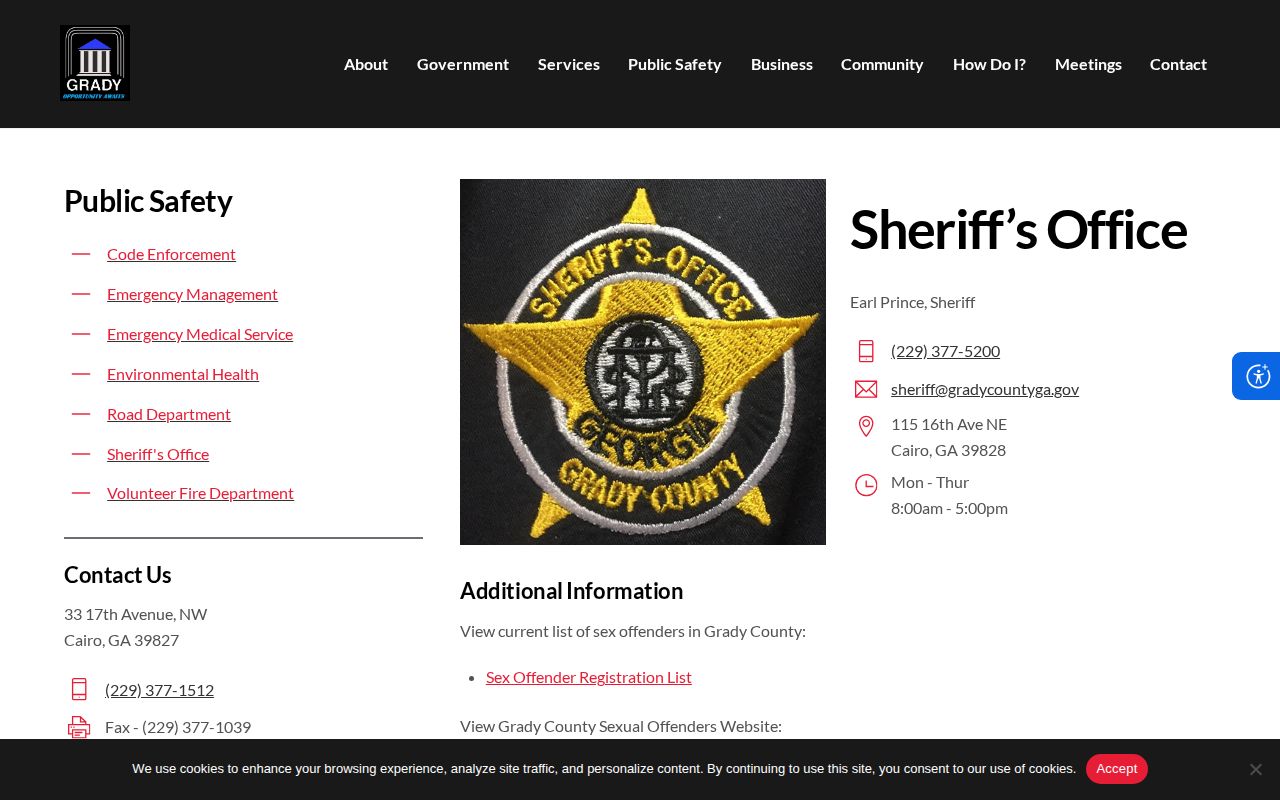
That contact page backs the sheriff-first approach for Grady County detention records. The legacy jail page identifies the detention operation while also showing why it should not be mistaken for a live roster.

The image is operational context. That is all it is. Current custody status and a booking photo still require the sheriff's response. The Attorney General's Open Government page explains how to request an existing record, including response times and costs.
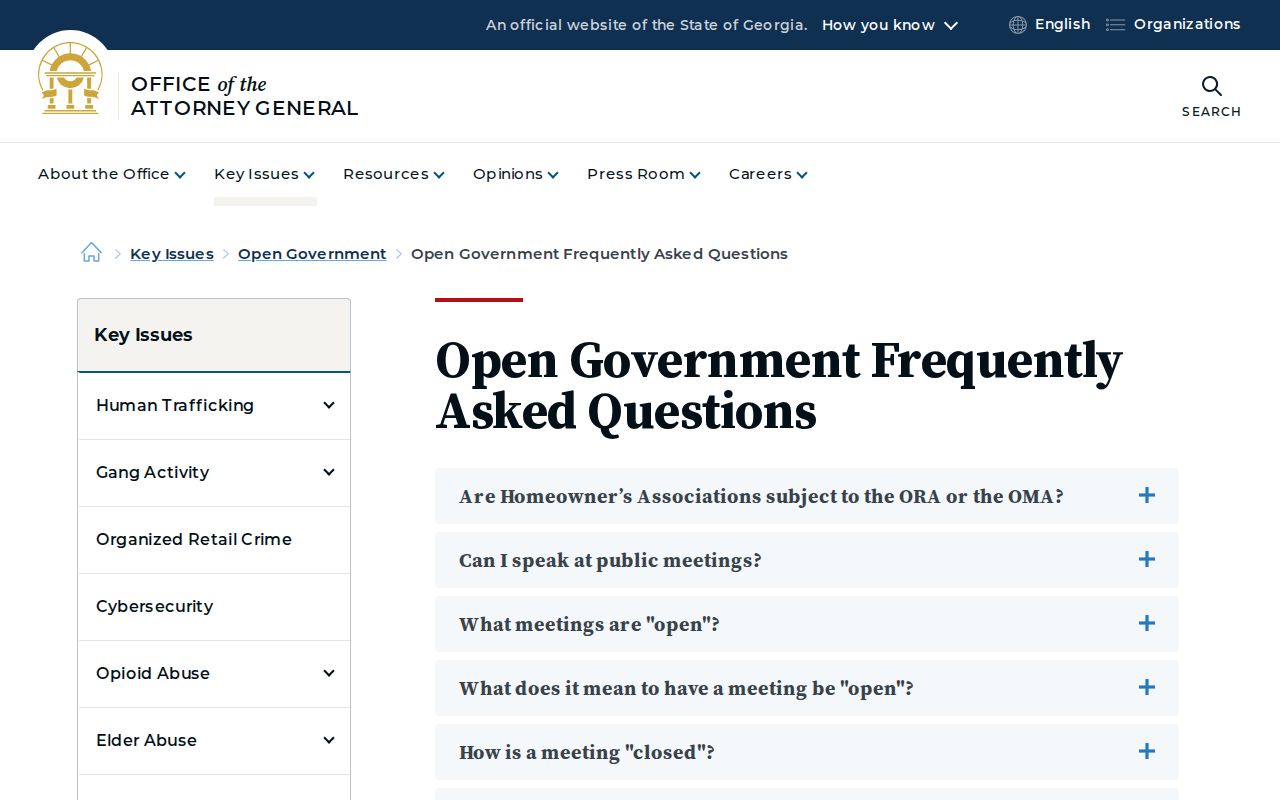
Use that state guidance alongside a narrow request. It describes the process, not a guarantee that every field you ask for must be released.