
Grady County Most Wanted Notices
No permanent Grady County most-wanted roster exists on any official channel. The sheriff posts a BOLO instead. That stands for "be on the lookout." These appear on the agency's news and alerts page. A post speaks for the day it went up, nothing more. It is not a warrant roundup. It cannot tell you whether the person is still being sought weeks later.
Some sites invent details anyway. A fixed count, a photo policy, update cycles, a reward schedule, or a recurring "Warrant Wednesday" feature have no basis in any official source. A photo in an alert belongs to that alert. It is not gallery material to copy elsewhere. Check the original post for its date, its warnings, and the current contact route.
The Grady County Sheriff's official homepage is the doorway to that news and alerts feed. The agency's older site names a warrant clerk and a GCIC TAC role. That staffing detail does not open a public search portal.
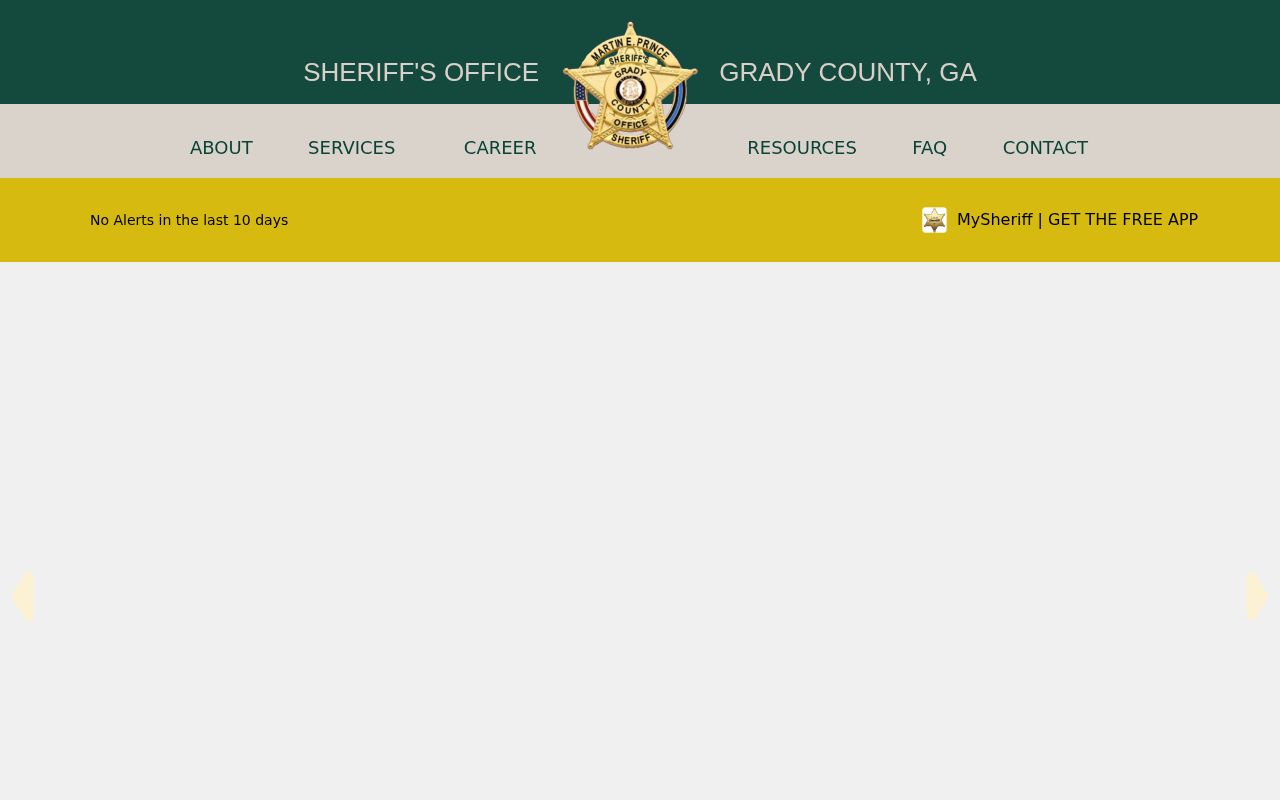
The official sheriff page is an agency gateway for alerts and updates. No standing Grady mugshot roster appears there.
What a Grady Wanted Notice Shows
No fixed list exists. So the table below covers what an official BOLO or alert can responsibly tell you. No single post is guaranteed to include every field. A notice speaks only for its own publication date. It covers any update the agency adds after that, too.
| Notice item | What it can establish |
|---|---|
| Agency and source | Which sheriff or partner agency issued the public request. |
| Posting date | When the agency made the statement available; it does not guarantee current status. |
| Name or identifying detail | The identity information the agency chose to publish, which can contain errors. |
| Photo or description | An image or description when the agency includes one, not a booking-photo guarantee. |
| Charge or warrant basis | The agency’s stated reason for seeking contact, not a court finding. |
| Contact instruction | The official route for tips, which may change and should be read from the source. |
A warrant is a court order with a specific legal basis. A BOLO is different. It is a public request to watch for a person, vehicle, or event. The two can overlap, but they are not the same thing. Someone may have an active court case while never appearing in an alert. An alert can also wrap up long before the court file is easy to track down.
How to Read the Wanted Alerts
Start with the official source. Treat a photo-bearing notice as a safety communication, not a collecting opportunity. Do not save, repost, or build images into your own list. Send what you know to the agency. Then verify the legal record with the proper custodian.
- Open the sheriff’s official news and alerts page and locate the original Grady County post.
- Read the posting date, agency wording, requested action, and contact instructions in full.
- If you recognize a person or location, keep your distance and report the information to the sheriff.
- Call 911 when there is immediate danger. Use the sheriff’s published non-emergency number for other information.
- For a record question, compare the notice with the county booking and court-record path instead of treating the alert as a custody result.
Do not knock on doors, tail a car, or confront anyone. Do not tip off a person about a possible warrant. Each of those moves creates danger. Each can derail an open investigation. Worried about your own status? A lawyer or the right court clerk is the person to call.
The official news interface is where Sheriff Martin "Earl" Prince's office posts fresh alerts. It shows whether an older one has been updated or replaced.
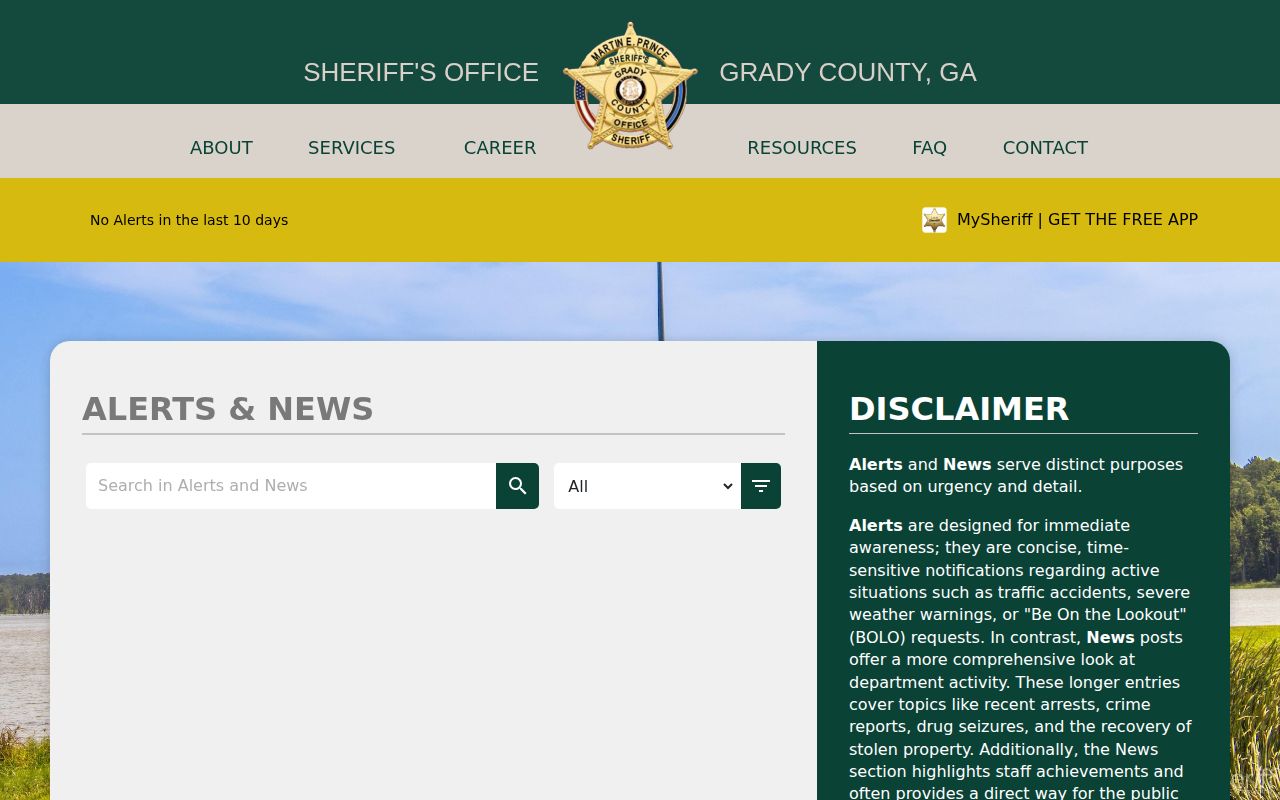
An alert alone does not show that the person is locked up in the Grady County Detention Facility today.
Grady County Tip Contact
No verified Grady County Crime Stoppers chapter exists on any official site. The same goes for a standing reward program. So do not promise a reward. Do not send anyone to an unverified tip form. The sheriff's published contact route is the safe place for current instructions.
Official sheriff contact
Grady County Sheriff’s Office
115 16th Avenue NE
Cairo, GA 39828
229-377-5200
Call 911 if the threat is happening now. For a non-urgent tip, use the number or method in the current official alert. Never send sensitive personal material to a third-party page. A borrowed county name is not a credential.
Safety first. A wanted notice is not an invitation to play detective, so keep your distance and let trained officers handle all contact.
Wanted Notice or Warrant Check?
A wanted notice and a warrant check answer different questions. The sheriff's alerts are handpicked agency notices. A warrant check asks whether a court order exists right now. Grady has no public warrant search portal. The sheriff's legacy staff page points to an internal Warrant Clerk and GCIC TAC function, and the Grady Magistrate Court describes its role in applications for arrest and search warrants.
The clerk, the sheriff, and the court each handle a separate piece. A docket search can show a filed case. That is not a live GCIC or NCIC confirmation. Anyone checking their own status should ask the agency or court directly how to inquire safely, and get legal advice when the stakes warrant it.
The internal warrant clerk role does not mean a public name-search tool exists. Warrant records often sit inside law-enforcement systems. Those systems never surface on the open web. The confirming office should also clarify the warrant type: arrest, search, a bond condition, or a court case.
Common names collide. Give the office a full name, date, agency, and case number when it can lawfully use them. Never publish private details to firm up a guess. A dead-end web search is not a clearance. An old notice is not a current answer either.
| Record type | What it means | Grady route |
|---|---|---|
| Arrest warrant | An order connected to an alleged offense and a person’s arrest. | Ask the sheriff or the issuing court; no public portal was verified. |
| Search warrant | An order authorizing a search under the legal terms issued by the court. | Magistrate Court explains warrant jurisdiction; public access depends on the record and law. |
| Court case entry | A filed case or docket record, not proof that a live warrant exists. | Use the clerk and official court e-access route. |
How to Check a Grady County Warrant
Start with the right office. Ask a precise question. A people-search page or an aging alert cannot stand in for current confirmation. A warrant can be active long before a case is easy to find, and a case can linger on a docket after its warrant is resolved.
- Write down the full name and any safe identifiers you already have, without posting private details publicly.
- Call Grady County Sheriff’s Office at 229-377-5200 and ask what present warrant questions it can answer.
- Contact Magistrate Court at 229-377-4132 for its own warrant, bond, or scheduling information.
- Contact the Superior, State, and Juvenile Court clerk at 229-377-2912 for filed case information.
- If the question concerns you, ask a lawyer or the issuing court how to resolve it. Do not evade service or approach another person.
For urgent public-safety matters, call 911. For anything else, use the current sheriff contact on the official website. Sheriff office hours run Monday through Thursday, 8:00 a.m. to 5:00 p.m. Court offices post weekday hours, but confirm before you drive over. The Magistrate Court source appears below to keep warrant jurisdiction separate from any public list.
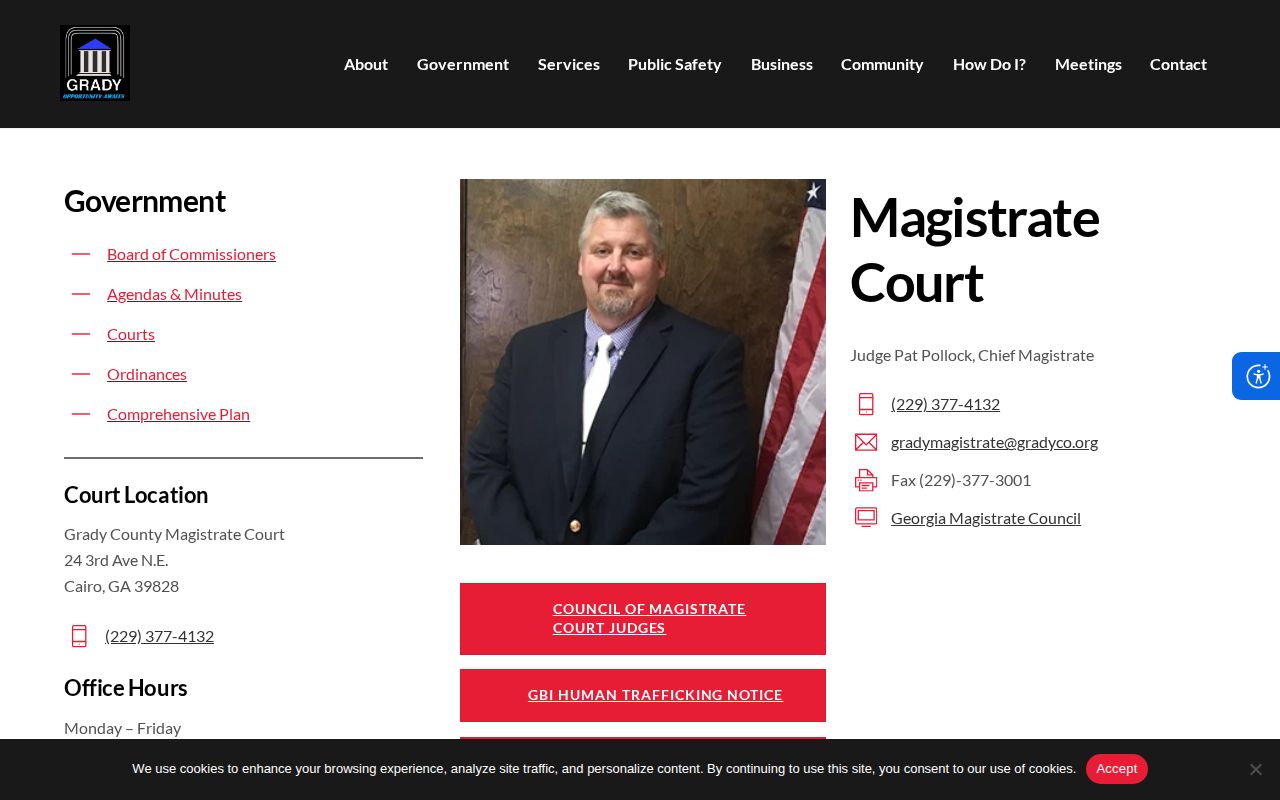
The court page does not provide a searchable warrant database.
MySheriff Alerts and Later Custody
The sheriff's official website promotes MySheriff as a free app. No registration is needed. It covers news, alerts, and services. Nothing official says it includes an inmate roster or booking-photo module. A BOLO sent through that app is still just an agency notice.
If the person later lands in state corrections, the Georgia Department of Corrections search covers that stage and may show a photo. The Bureau of Prisons locator handles federal custody. It offers no public booking photos. The ICE locator tracks immigration detention and has no mugshot function at all.
Those later searches answer a different question than a Grady alert does. A person can be wanted without ever being booked. Someone can be booked and released before a case shows up. A person can also be moved along after county intake. Tie any locator result back to the court or agency record before calling it a custody change. The sheriff's alert page stays the source for the original notice.
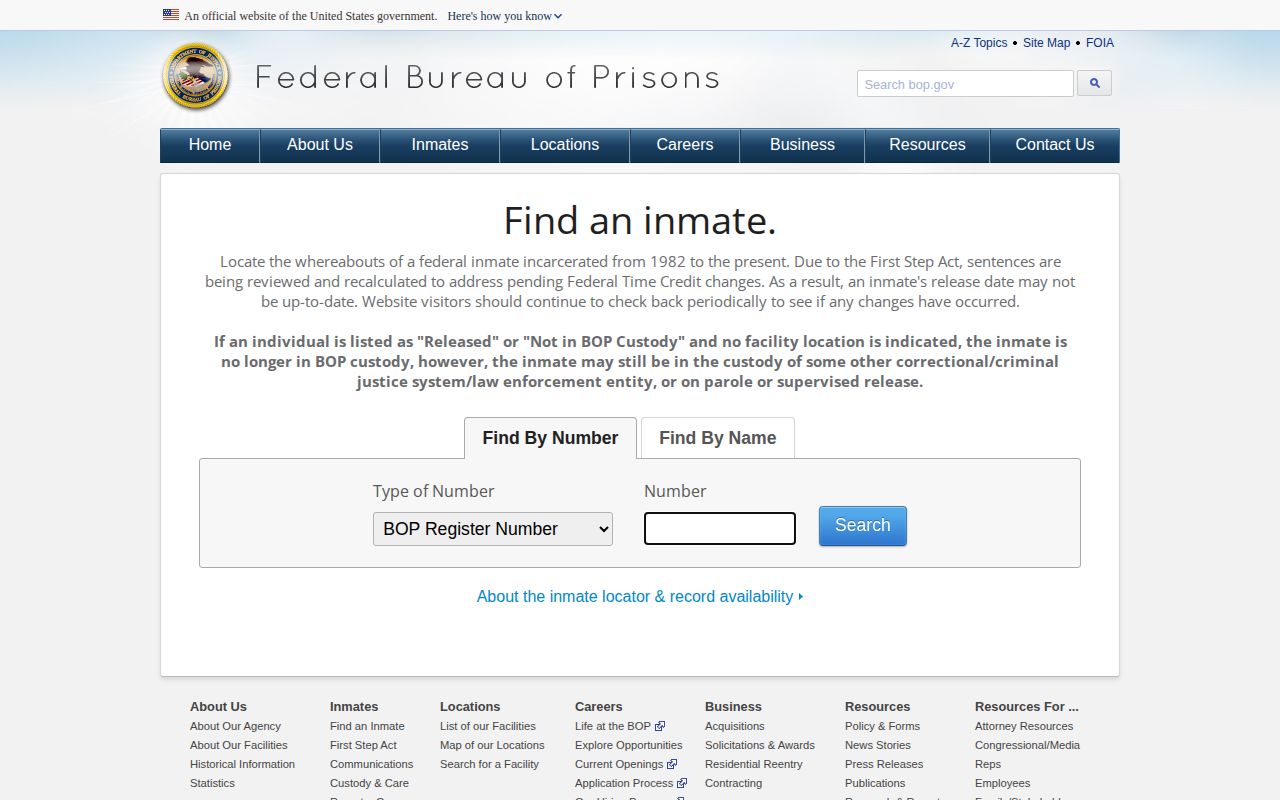
The federal locator capture shows why a county wanted notice and a later custody search are two different records.
Note: A federal, state, or immigration locator result concerns its own custody system and cannot prove what happened in the original Grady booking.
Charges Still Need Court Review
A wanted alert means the sheriff wants contact. That is all it means. A warrant is different. It authorizes an arrest or a search. Neither one settles the case. In a felony matter, the Grady Magistrate Court puts it plainly: probable cause decides only whether the case may proceed, and the question of guilt belongs to the later court process.
After a booking, compare the entry against what the court actually filed. Charges get reduced or dropped all the time. Some people walk out while the case continues. Others stay in it even after release. Any public alert should carry a date, an attribution, and a follow-up court check before anyone describes an outcome.
Start with the case number and the right court. State and Superior Court records run through PeachCourt from the official e-access directory. Magistrate Court handles the early probable-cause and warrant work. A probable-cause inquiry only asks whether a matter may move forward. Keep that distinction next to every wanted notice and booking reference.